A complete record. An unanswered alarm.
Missing data attract attention. The time between an alarm and an effective response deserves the same scrutiny.
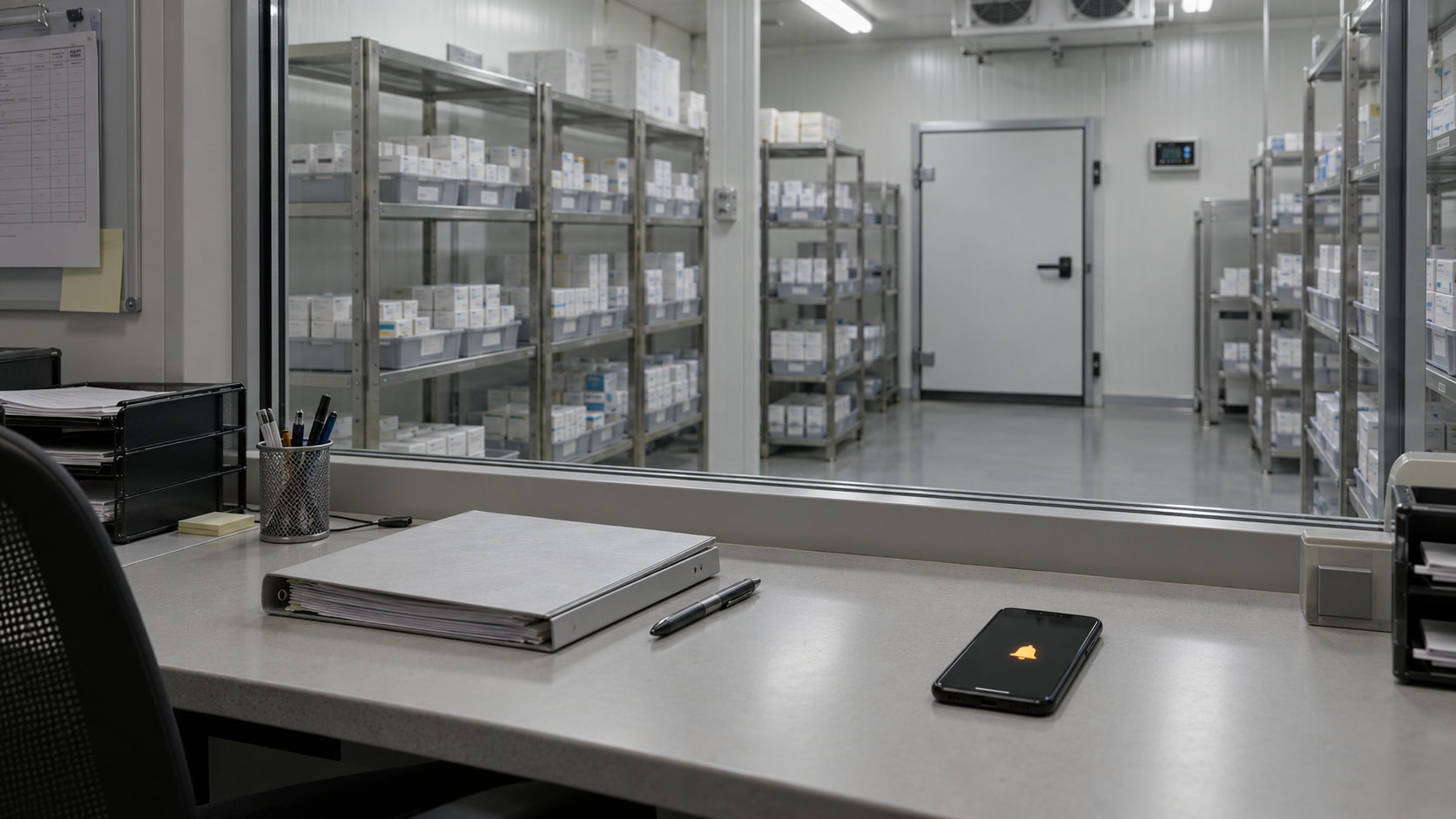
Saturday, midday
An alarm is sent at midday on a Saturday. The temperature has crossed a limit. Nobody intervenes on site for several hours. Every reading is recorded, and the system can show exactly when the notification was delivered.
The record is complete. The product may still be exposed. This example captures something that has concerned me for years: what happens after the notification leaves the system?
What users worry about
In my experience, a gap in the temperature record quickly becomes a major concern. Missing or overdue calibration comes next. An alarm that was sent but received no timely attention can attract less scrutiny.
I understand the anxiety. A missing record is visible and difficult to explain during an inspection. A calibration date is easy to check. The adequacy of an overnight or weekend response takes more investigation.
In those discussions, I sometimes hear more anxiety about explaining a missing reading to an inspector than about explaining several hours without an effective response. Fear of the finding starts to shape the priorities.
One missing reading needs an assessment
Suppose a system records every ten minutes: 144 scheduled readings in a day. One is missing. That fact alone does not tell us whether product quality was affected, or whether the alarm function continued to operate.
A failed upload with measurements retained locally is different from a sensor that stopped measuring. If alarms are evaluated locally, they may have continued during a communication failure. If they depend on the missing transmission, the loss may affect detection as well as the record.
Nor do satisfactory readings on either side prove that nothing happened in between. The relevant assessment depends on the interval, the failure mechanism, the equipment, the product and any other available evidence. There is no general allowance for one missing reading out of 144.
Investigate the gap and assess its consequences through the quality process. Give the delayed alarm response the same seriousness. Its absence from a missing-data report does not make it a lesser risk.
The record should include the response
FDA’s 2018 drug CGMP data-integrity guidance addresses reliable and accurate data and risk-based strategies for preventing and detecting integrity problems. It supports the need for trustworthy records. A complete set of temperature readings still needs to be connected to the actions taken when conditions went wrong.
For the Saturday alarm, reconstruct the sequence: notification, acknowledgement, assessment and effective intervention. Identify who held responsibility and how the escalation worked when the first contact did not respond.
Acknowledging a message is not the same as correcting the condition. Equally, immediate physical attendance is not the only possible response: the appropriate action depends on the equipment, the exposure and the approved arrangements. The organisation needs to justify the response time against the risk.
Make operational performance visible
Inspectors can examine alarm handling and quality-system effectiveness. Management still needs to know how its weekend arrangements perform between inspections.
Track acknowledgement, assessment and effective intervention separately. Look for repeated escalation failures. Judge the elapsed time against the product and exposure; a convenient target on a dashboard may say little about whether the response was adequate.
Calibration remains essential too. An overdue calibration requires assessment of the measurements and decisions that may be affected. Neither a complete record nor a prompt alarm compensates for a measurement we cannot trust.
For me, a monitoring review should follow an event all the way through: was the measurement dependable, was the evidence preserved, did the alert reach the right person, and did someone act in time?
At the next review, put the missing-data report beside the weekend alarm-response history. Ask the team to account for both.
Explore Monitoring Notes →